


After several fantastic draft picks and feisty playoff performances, the Magic topped off their rebuild by trading for Desmond Bane. The first season didn’t go as expected, with several long-term injuries holding them back and some growing pains that limited them to the 8-seed. Their outlook looks shaky, but then they showed glimpses of their high ceiling in the first four games of the Pistons series when the group was fully healthy.
The Magic aren’t giving up hope anytime soon and will look to build on their inspiring first-round fight under a new head coach. The Eastern Conference will be tougher next year, with tanking expected to be curbed and teams like the Pacers, Hornets, and Heat on the rise. It isn’t out of the realm of possibility that they make a run at a top seed, as many expected them to last season.
With that said, the Magic have several challenges ahead of them starting this offseason. They now have one of the more expensive payrolls in the league, with limited means to improve the roster. Their objective this summer is not only to find ways to add depth, but to maintain it. They are expected to be taxpayers, and they’ll happily do so if the team is good enough. But they need to do so in a sustainable way in the apron era, and it’ll be challenging with their payroll expected to continue rising at the top end of the roster.
2026 Offseason Previews

Atlanta Hawks | Boston Celtics | Brooklyn Nets | Charlotte Hornets | Chicago Bulls | Cleveland Cavaliers | Dallas Mavericks | Denver Nuggets | Detroit Pistons | Golden State Warriors | Houston Rockets | Indiana Pacers | Los Angeles Clippers | Los Angeles Lakers | Memphis Grizzlies |
2026 Contract Projections
Current Extension Eligible Players Part 1 | Current Extension Eligible Players Part 2 | Current Extension Eligible Players Part 3 | Current Extension Eligible Players Part 4 | Standout Minimum Players | Free Agents and Pending Options Part 1 | Free Agents and Pending Options Part 2
Salary cap and apron situation
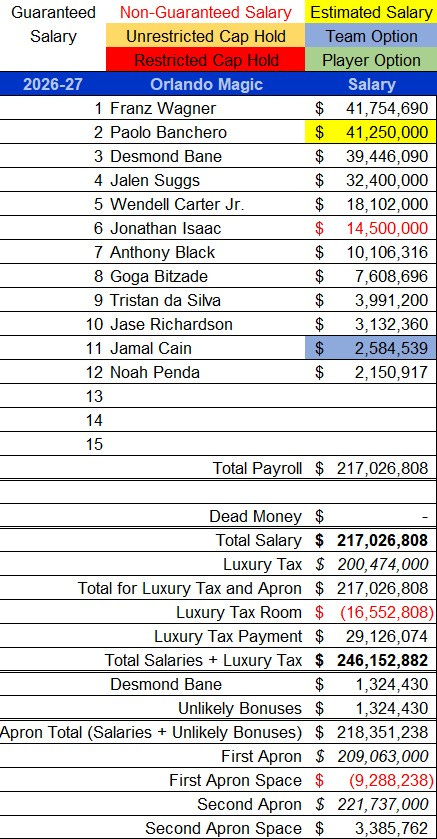
The Magic are entering the offseason with 11 players on the roster totaling $217 million in salaries. They are projected to be over the $200.5 million luxury tax line and $209.1 million first apron. Their high payroll is the result of a top-heavy roster and Paolo Banchero’s five-year, $239 million maximum contract set to kick in. It’s accompanied by Franz Wagner and Desmond Bane, who are also making around 25 percent of the salary cap.
The current team effectively leaves the Magic operating as a second apron team when factoring in that they need to fill two roster spots before the start of the regular season. Their payroll is $4.7 million below the $221.7 million second apron, so they could theoretically stay below it by signing one veteran minimum player ($2.45 million) and the 46th pick in the 2026 draft to a rookie minimum salary ($1.35 million). However, that is negated by Bane’s $1.3 million in unlikely incentives that count against their total salaries for apron purposes.
Teams above the second apron are severely limited in roster-building resources. They cannot aggregate salaries together in a trade, even for one player making as much or less than the outgoing total. They have no form of the mid-level exception, cannot receive a player in return for signing and trading one of their own free agents, and cannot trade cash. They are limited to re-signing their own players, signing players they own the draft rights to, and signing minimum players to increase the payroll.
Teams above the second apron also have their first-round pick seven years into the future frozen, meaning it is unable to be traded. For example, the Cavaliers will be unable to trade their 2033 first-round pick as a result of finishing above the second apron in 2025-26, but they can unfreeze it by remaining under the second apron in three of the subsequent four seasons. Teams with frozen draft picks would also see them drop to the end of the first round if they remain above the second apron in two of the subsequent four seasons.
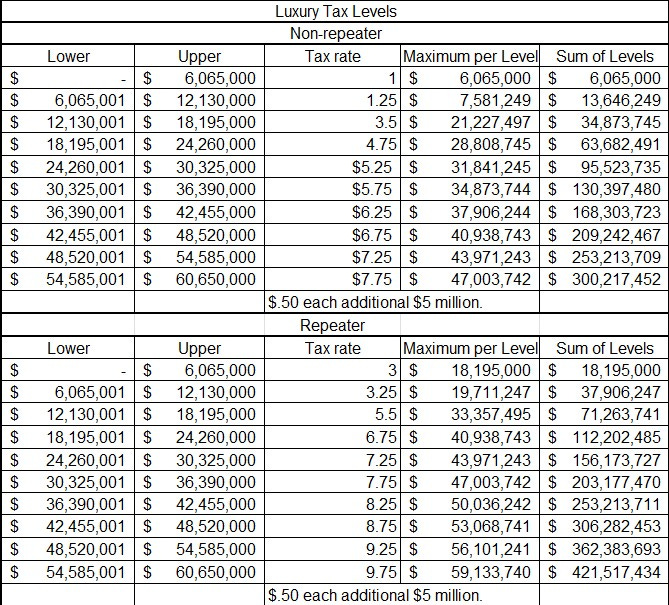
Perhaps the biggest reason teams want to avoid the second apron is the expensive luxury tax penalties associated with it. The new punitive system penalizes teams with higher tax rates starting above the second tax level. The second apron threshold coincides with the third tax level, so teams pay higher rates by virtue of being in second apron territory.
All these reasons make it highly unlikely that the Magic will operate as a second apron team. President of basketball operations Jeff Weltman said recently that they will pay the luxury tax this season. How much they’re willing to pay is unclear. They’d face a small penalty in the $10-20 million range as a team near the first apron than one in the $40 million-and-up range for teams at or above the second apron.
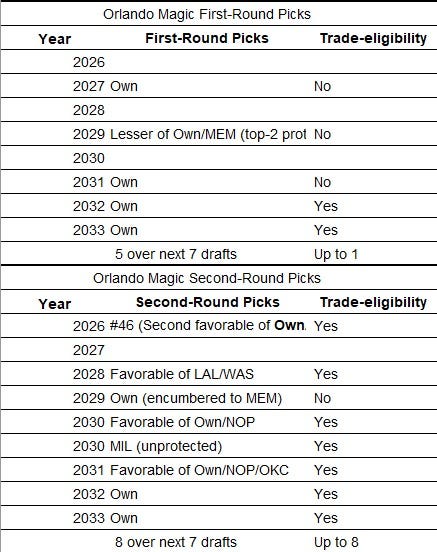
The Magic also probably don’t want to freeze their 2034 first-round pick in case they need to trade it. They are currently limited to trading just one first-round pick this season: either their 2032 or 2033 first-round pick. If they remain under the second apron in 2026-27, they could trade their 2027, 2032, and 2034 first-round picks in 2027-28.
So the Magic are going to need to reduce payroll significantly, not just to get under the second apron, but to have enough space below it to fill out the rest of their roster. The firing of Jamahl Mosley indicates that they won’t trade any of their top six core pieces. They’ll want to see how the core looks together under a new coach and with better health before coming to any conclusions on whether all the pieces work or if changes are needed.
The solution to their payroll issues will likely come from moving on from Jonathan Isaac. He has a $14.5 million salary, but only $8 million of it is guaranteed for next season. He will almost certainly be the Magic’s cap casualty. The bigger question is if they trade him, waive him, or stretch the remainder of his guaranteed portion.
